NIH Stroke Scale/Score (NIHSS)
Quantifies stroke severity.
id
715
full_title
NIH Stroke Scale/Score (NIHSS)
short_title
NIH Stroke Scale (NIHSS)
med_description
Quantifies stroke severity and monitors for neurological changes over time.
description
The NIH Stroke Scale/Score (NIHSS) quantifies stroke severity based on weighted evaluation findings.
keywords
NIHSS, NIH stroke scale, stroke scale calculator, stroke severity score, nih stroke calc, stroke scale, new stroke scale, rule out stroke, stroke prognosis, national stroke scale, nihss stroke score, nih stroke scale, nih stroke score, stroke rule out nih, stroke r/o nih, nih stroke, stroke nih scale, r/o stroke nih, r/o cva nih, r/o cva short nih, nihss cva, NIH stroke score, nih CVA scale, nih CVA score, nihss calc, nihss mdcalc
complaint
[ "Weakness" ]
formula
Addition of the selected points, as above.
evidence
- The first iteration of the NIH stroke scale was derived by Brott et al in a pilot study of 10 patients who were evaluated within 3-weeks of having an ischemic stroke. Authors applied the Toronto Stroke Scale, the Oxbury Initial Severity Scale and the Cincinnati Stroke Scale to these patients, analysed the results and then created a composite scale. This was intended for use in an NIH-sponsored trial of naloxone for stroke (Brott 1989).
- Brott’s Cincinnati/Naloxone stroke scale was modified by Lyden and colleagues (1994) for use in the National Institute of Neurological Disorders and Stroke (NINDS) study on tissue plasminogen activator (tPA) in patients with ischemic stroke (NINDS 1995).
- A retrospective review of 1281 subjects with ischemic stroke found that for every 1 point increase in the NIHSS decreased the likelihood of an excellent outcome by 24% at 7 days and 17% at 3 months (Adams 1999).
- In a trial of 94 patients, authors found that each 1 point increase in the NIHSS when performed within 24 hours of the stroke correlated with a decreased likelihood of the patient being discharged (Schlegel 2003).
- A study of 893 patients found that their initial NIHSS score (performed within 72 hours of the ischemic event) was predictive of whether the patient would need to be placed in a nursing home or need to be sent to rehabilitation. Patients with moderate (6-13 points) or severe (>14 points) NIHSS scores were 3 times more likely to be placed in a nursing home after discharge and 8 more times likely to require rehabilitation therapy (Rundek 2000).
- A study of 377 patients found that when performed 24-48 hours after an ischemic stroke, that the NIHSS was broadly predictive of group outcomes at 1-year, with 75% of patients who had a score of 4 or less being functionally independent (Appelros 2004).
- Median score in this study was 6, with 33% of patients dying within the first year after their event.
- A prospective trial of 54 patients found that combining diffusion weighted MRI imaging with the NIHSS score was more predictive of clinical outcomes at 3 months (70%) than with using the score (43%) or imaging (54%) alone (Yoo 2010).
- In an analysis of 312 subjects from the NINDS trials, authors found that an NIHSS of >20 was associated with a 17% rate of intracranial hemorrhage with tPA vs. a 3% hemorrhage rate in patients with a score of <10 (The NINDS t-PA Stroke Study Group 1997).
- Race is not included in the score, but research shows that race/ethnicity and socioeconomic status are determinants in the likelihood that patients with ischemic stroke receive certain interventions. This appears to be independent of NIH stroke scale scores per a 2021 study in Neurology (Havenon et al 2021).
measurements
[]
information
Language/aphasia test


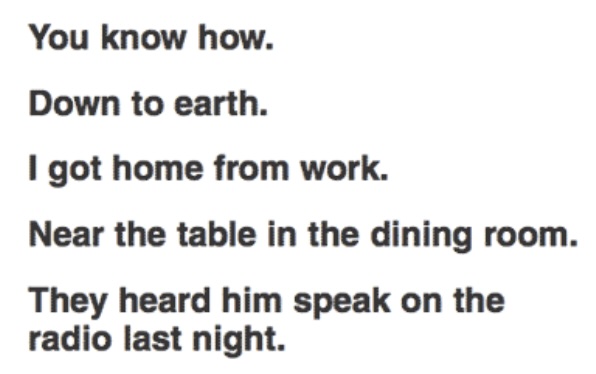
Dysarthria test

refrences
{ "Clinical Practice Guidelines": [], "Manufacturer Website": [], "Original/Primary Reference": [ { "href": "https://www.ncbi.nlm.nih.gov/pubmed/7974549", "text": "Lyden P, Brott T, Tilley B, et al. Improved reliability of the NIH Stroke Scale using video training. Stroke 1994;25:2220-2226" } ], "Other References": [ { "href": "https://www.ncbi.nlm.nih.gov/pubmed/20595665", "text": "Yoo AJ, Barak ER, Copen WA, Kamalian S, Gharai LR, Pervez MA, Schwamm LH, González RG, Schaefer PW. Combining acute diffusion-weighted imaging and mean transmit time lesion volumes with National Institutes of Health Stroke Scale Score improves the prediction of acute stroke outcome. Stroke. 2010 Aug;41(8):1728-35. doi: 10.1161/STROKEAHA.110.582874. Epub 2010 Jul 1. PubMed PMID: 20595665." }, { "href": "https://www.ncbi.nlm.nih.gov/pubmed/9368550", "text": "Intracerebral hemorrhage after intravenous t-PA therapy for ischemic stroke. The NINDS t-PA Stroke Study Group. Stroke. 1997 Nov;28(11):2109-18. PubMed PMID: 9368550." }, { "href": "https://www.ncbi.nlm.nih.gov/pubmed/2749846", "text": "Brott T, Adams HP Jr, Olinger CP, Marler JR, Barsan WG, Biller J, Spilker J,Holleran R, Eberle R, Hertzberg V, et al. Measurements of acute cerebral infarction: a clinical examination scale. Stroke. 1989 Jul;20(7):864-70. PubMed PMID: 2749846." }, { "href": "https://www.cdc.gov/nchs/fastats/leading-causes-of-death.htm", "text": "CDC FastStats: Leading Causes of Death. Last Reviewed: October 25, 2024. Accessed March 18, 2025." }, { "href": "https://www.frontiersin.org/journals/neurology/articles/10.3389/fneur.2022.1093392/full", "text": "Comer et al. National Institutes of Health Stroke Scale (NIHSS) scoring inconsistencies between neurologists and emergency room nurses. Frontiers Neurology. 2022; 3. https://doi.org/10.3389/fneur.2022.1093392" }, { "href": "https://pmc.ncbi.nlm.nih.gov/articles/PMC8665433/", "text": "Havenon et al. Acute Ischemic Stroke Interventions in the United States and Racial, Socioeconomic, and Geographic Disparities. Neurology. 2021 Dec; 97 (23): e2292-e2303 doi: 10.1212/WNL.0000000000012943" }, { "href": "https://www.jmir.org/2020/9/e20641/", "text": "Park E, Lee K, Han T, Nam HS. Automatic Grading of Stroke Symptoms for Rapid Assessment Using Optimized Machine Learning and 4-Limb Kinematics: Clinical Validation Study. Journal of Medical Internet Research. 2020 May; 22:9: e20641 https://doi.org/10.2196/20641" }, { "href": "https://www.ahajournals.org/doi/10.1161/STROKEAHA.123.044384", "text": "Stockbridge et al. New Picture Stimuli for the NIH Stroke Scale: A Validation Study. Stroke. 2024 Jan; 55(2) https://doi.org/10.1161/STROKEAHA.123.044384" } ], "Outcomes": [], "Validation": [ { "href": "https://www.ncbi.nlm.nih.gov/pubmed/12511774", "text": "Johnston KC, Connors AF Jr, Wagner DP, Haley EC Jr. Predicting outcome in ischemic stroke: external validation of predictive risk models. Stroke. 2003 Jan;34(1):200-2." }, { "href": "https://www.ncbi.nlm.nih.gov/pubmed/10408548", "text": "Adams HP Jr, Davis PH, Leira EC, Chang KC, Bendixen BH, Clarke WR, Woolson RF, Hansen MD. Baseline NIH Stroke Scale score strongly predicts outcome after stroke: A report of the Trial of Org 10172 in Acute Stroke Treatment (TOAST). Neurology. 1999 Jul 13;53(1):126-31. PubMed PMID: 10408548." }, { "href": "https://www.ncbi.nlm.nih.gov/pubmed/12511764", "text": "Schlegel D, Kolb SJ, Luciano JM, Tovar JM, Cucchiara BL, Liebeskind DS, Kasner SE. Utility of the NIH Stroke Scale as a predictor of hospital disposition. Stroke. 2003 Jan;34(1):134-7. PubMed PMID: 12511764." }, { "href": "https://www.ncbi.nlm.nih.gov/pubmed/11071497", "text": "Rundek T, Mast H, Hartmann A, Boden-Albala B, Lennihan L, Lin IF, Paik MC, Sacco RL. Predictors of resource use after acute hospitalization: the Northern Manhattan Stroke Study. Neurology. 2000 Oct 24;55(8):1180-7. PubMed PMID: 11071497." }, { "href": "https://www.ncbi.nlm.nih.gov/pubmed/14530634", "text": "Appelros P, Terént A. Characteristics of the National Institute of Health Stroke Scale: results from a population-based stroke cohort at baseline and after one year. Cerebrovasc Dis. 2004;17(1):21-7. Epub 2003 Oct 3. PubMed PMID: 14530634." } ], "Validations": [] }
pearls
The National Institutes of Health Stroke Scale (NIHSS) was developed to help physicians objectively rate severity of ischemic strokes.
- Increasing scores indicate a more severe stroke and has been shown to correlate with the size of the infarction on both CT and MRI evaluation.
- NIHSS scores when assessed within the first 48 hours following a stroke have been shown to correlate with clinical outcomes at the 3-month and 1-year mark.
- Patients with a total score of 4 or less generally have favorable clinical outcomes and have a high likelihood of functional independence regardless of treatment.
Points to keep in mind:
- Many guidelines and protocols warn that administering tPA in patients with a high NIHSS score (>22) is associated with increased risk of hemorrhagic conversion.
- These patients, however, are also the most severely debilitated and dependent from their strokes as well.
- Some components of the NIHSS have lower interrater reliability (i.e. facial movement, limb ataxia, neglect, level of consciousness, and dysarthria), and some may be quite limited due to altered mental status, for example.
- According to a 2023 study, one in three initial NIHSS scores had a clinically meaningful difference in scores between neurologists and nurses, further supporting the need for improvement in interrater reliability (Comer et al 2023).
A simpler, modified version of the NIHSS has been found to have greater interrater reliability with equivalent clinical performance, although it has not been as widely adopted as the original NIHSS.- The patient with even a large territory posterior circulation stroke syndrome may still have a low or normal NIHSS, highlighting one of its important limitations.
usecase
The NIHSS can help physicians quantify the severity of a stroke in the acute setting.
reasons
There are nearly 800,000 cases of acute stroke in the United States every year, with 165,000 associated deaths (5th leading cause of death in Americans) (CDC 2022). The NIHSS can help physicians determine the severity of a stroke, predict clinical outcomes.
next_advice
- Consult Neurology immediately (if available) for all patients presenting with ischemic stroke.
- Evaluate whether the patient is a potential candidate to receive
intravenous thrombolysis (tPA) . - Consider further imaging including CT, CT angiography and MRI/MRA.
next_actions
- The NIHSS is broadly predictive of clinical outcomes, but it is important to recognize that individual cases will vary and that management decisions must be made in consultation with the patient whenever possible.
- Patients with a score of <4 are highly likely to have good clinical outcomes.
- Whenever possible, patients with acute stroke should be transferred to a stroke center for their initial evaluation and treatment, as the holistic care (medical optimization, early initiation of PT and OT, patient and family education and discharge planning) is associated with improved clinical outcomes; some argue that most of the gains in stroke morbidity and mortality are due to these improvements in stroke care.
next_management
In patients who present with symptoms concerning for ischemic stroke:
- Consult Neurology.
- Determine the onset of stroke symptoms (or time patient last felt or was observed normal).
- Obtain a stat head CT to evaluate for hemorrhagic stroke.
- In appropriate circumstances and in consultation with both neurology and the patient, consider
IV thrombolysis for ischemic strokes in patients with no contraindications. - Always consider stroke mimics in the differential diagnosis, especially in cases with atypical features (age, risk factors, history, physical exam), including:
- Recrudescence of old stroke from metabolic or infectious stress.
- Todd’s paralysis after seizure.
- Complex migraine.
- Pseudoseizure, conversion disorder.
diseases
[ "Stroke / Transient Ischemic Attack (TIA)" ]
instructions
The NIH Stroke Scale has many caveats buried within it. If your patient has prior known neurologic deficits e.g. prior weakness, hemi- or quadriplegia, blindness, etc. or is intubated, has a language barrier, etc., it becomes especially complicated. In those cases, consult the NIH Stroke Scale website. MDCalc's version is an attempt to clarify many of these confusing caveats, but cannot and should not be substituted for the official protocol.
Rules:
- Score what you see, not what you think.
- Score the first response, not the best response (except Item 9 - Best Language).
- Don’t coach.
published
2022-04-21T20:29:46.057Z
purpose
[ "Diagnosis", "Prognosis" ]
search_terms
[ "tia", "cva", "tpa", "stroke" ]
seo
{ "keywords_en": "NIHSS, NIH stroke scale, stroke scale calculator, stroke severity score, nih stroke calc, stroke scale, new stroke scale, rule out stroke, stroke prognosis, national stroke scale, nihss stroke score, nih stroke scale, nih stroke score, stroke rule out nih, stroke r/o nih, nih stroke, stroke nih scale, r/o stroke nih, r/o cva nih, r/o cva short nih, nihss cva, NIH stroke score, nih CVA scale, nih CVA score, nihss calc, nihss mdcalc", "meta_description_en": "The NIH Stroke Scale/Score (NIHSS) quantifies stroke severity based on weighted evaluation findings." }
specialty
[ "Critical Care", "Critical Care (Neurologic)", "Emergency Medicine", "Hospitalist Medicine", "Neurology" ]
departments
[ "Neurologic" ]
tags
[]
version_number
1
versions
[]
related
[ { "calcId": 1934, "short_title_en": "tPA Contraindications", "slug": "tpa-contraindications-ischemic-stroke" }, { "calcId": 1756, "short_title_en": "Modified NIH Stroke Scale", "slug": "modified-nih-stroke-scale-score-mnihss" }, { "calcId": 1706, "short_title_en": "THRIVE Score", "slug": "thrive-score-stroke-outcome" } ]
ismed
true
section
[ "whenToUseViewed", "pearlsPitfallsViewed", "whyUseViewed", "nextStepsViewed", "evidenceViewed" ]
cleaned_departments
[ "neurology" ]
cleaned_use
[ "The NIHSS can help physicians quantify the severity of a stroke in the acute setting." ]
pub
true